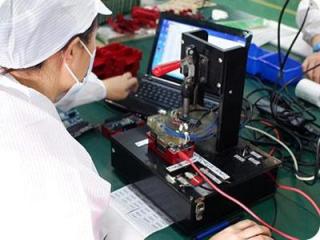
Everything Else
There is no single PCB testing method that can detect every manufacturing and assembly defect.
Flying probe testing is often suitable for prototypes and low-volume PCB production because it does not require a dedicated test fixture. ICT (In-Circuit Testing) becomes more attractive for stable, higher-volume products where fixture cost can be distributed across a large production run. AOI checks visible assembly defects, X-ray inspection examines hidden solder joints, and functional testing determines whether the completed PCBA actually performs its intended functions.
For many PCB assembly projects, the most effective quality-control strategy is therefore not choosing only one test, but combining inspection and electrical testing methods according to board complexity, component package, production volume and product reliability requirements.
AVPCB’s existing manufacturing capability includes flying probe testing, AOI, X-ray inspection and functional testing, allowing testing requirements to be incorporated into a PCB or PCBA manufacturing project according to customer requirements.
What Are the Main PCB Testing Methods?
Test Method | Main Purpose | Best Suited For |
AOI | Visible component and solder inspection | SMT production |
X-Ray Inspection | Hidden solder-joint inspection | BGA, QFN and complex PCBA |
Flying Probe Test | Opens, shorts and electrical verification | Prototype / low volume |
ICT | Component and circuit-level electrical test | Medium/high-volume production |
Functional Test | Verify finished board operation | Final PCBA validation |
PCB testing can be divided broadly into two groups:
Inspection methods identify manufacturing or assembly defects such as missing components, incorrect polarity, poor solder joints or hidden soldering problems.
Electrical and functional tests determine whether circuits, components and completed assemblies operate correctly.
Common methods include:
The important point for buyers is that these methods are complementary rather than interchangeable.
What Is Flying Probe Testing?
Flying probe testing uses computer-controlled probes that move between designated test points on a PCB or PCBA.
Unlike conventional fixture-based ICT, it generally does not require a custom bed-of-nails fixture. This makes flying probe testing especially useful when:
- Production quantity is low
- PCB designs change frequently
- Prototype boards need electrical verification
- Test fixture investment is not justified
- Engineering validation is required before mass production
AVPCB already identifies flying probe testing as one of its available PCB testing capabilities.
Flying Probe vs ICT: What Is the Difference?
Factor | Flying Probe | ICT |
Dedicated Fixture | Usually not required | Usually required |
Initial Setup Cost | Lower | Higher |
Programming Flexibility | High | Lower after fixture creation |
Test Speed | Slower | Faster |
Prototype Production | Excellent | Usually less suitable |
Small Batch | Excellent | Depends on economics |
Large Volume | Less efficient | Excellent |
Frequent Design Changes | Better | Fixture may require changes |
Mature Stable Product | Suitable | Usually more efficient |
For PCB buyers, the most important difference is not simply the equipment used.
PCB Testing as Part of One-Stop PCBA Manufacturing
Testing should not be treated as an isolated final step.
For reliable PCB assembly, quality control begins with incoming PCB and component inspection and continues through solder paste printing, SMT placement, reflow soldering, inspection and final electrical or functional testing.
AVPCB provides one-stop services covering PCB manufacturing, component sourcing, SMT and DIP assembly, with available testing capabilities including flying probe, AOI, X-ray inspection and functional testing.
For a new PCB assembly project, send your Gerber files, BOM, assembly files, production quantity and testing requirements so that the appropriate inspection and testing process can be evaluated before production.
Discover more solutions and related products in our product catalog.


