Home - Furniture - Garden Supplies
For a furniture maker, the choice of sheet goods is often as consequential as the choice of joinery. While solid lumber remains the gold standard for heirloom pieces, plywood is the workhorse of the modern shop, providing the flat, stable surfaces required for cabinetry, tabletops, and structural carcasses. For decades, traditional timber-based plywood—typically made from birch, fir, or maple—was the only serious option. However, the maturation of the bamboo industry has introduced bamboo plywood as a formidable competitor. Deciding which material performs better requires looking past the surface aesthetics and examining the mechanical properties, workability, and long-term stability from the perspective of a person behind the table saw.
The Structural Core: Fibers vs. Growth Rings
To understand the performance differences, one must look at the biological origin of each material. Traditional plywood is manufactured by "peeling" a log on a giant lathe to create thin veneers, which are then glued together in alternating grain directions. This cross-lamination is what gives plywood its strength and resistance to warping compared to solid wood. However, the quality of traditional plywood is highly dependent on the species of the tree and the grade of the veneer. A high-quality Baltic Birch plywood is dense and consistent, while a low-grade construction fir plywood may contain large internal voids that can ruin a furniture project during the final assembly.
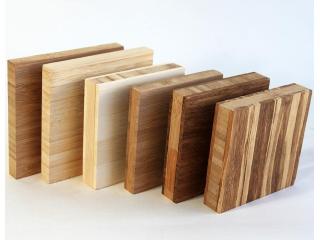
Bamboo plywood is constructed differently. Because bamboo is a grass and not a tree, it does not have growth rings. Instead, the hollow stalks are sliced into thin strips, boiled to remove sugars and starches, and then dried. These strips are then glued together either horizontally or vertically to create a solid panel. In the case of strand-woven bamboo plywood, the fibers are shredded and compressed under immense pressure with resin. This results in a panel that is essentially a fiber-reinforced composite. For a furniture maker, this means bamboo plywood offers a level of density and internal consistency that even the highest-grade birch plywood struggles to match. Voids are virtually non-existent in bamboo plywood, which is a massive advantage when machining intricate joints or exposed edges.
Density and Janka Hardness in the Workshop
Hardness is a double-edged sword for furniture makers. On one hand, a hard material resists dents and scratches, which is ideal for dining tables or work surfaces. On the other hand, extremely hard materials are tougher on tools and more prone to chipping.
Regular plywood varies wildly in hardness. A maple-faced plywood has a decent surface hardness, but the inner plies are often made of softer woods like poplar or fir to keep the weight down and the cost low. This means that while the surface looks tough, a sharp impact can still cause a "crush" because the soft core collapses under the veneer.
Bamboo plywood, especially the strand-woven variety, is remarkably hard throughout its entire thickness. On the Janka scale, bamboo plywood often scores between 1,200 and 3,000 lbf depending on the construction style. For comparison, White Oak sits around 1,360. For a maker, this means the finished piece of furniture will be incredibly resilient. However, it also means you must use high-quality carbide-tipped blades and bits. Working with bamboo plywood feels more like working with an extremely dense exotic hardwood or even a soft metal. It requires slower feed rates and sharp tools to avoid burning, as the high resin content and density can generate significant heat during cutting.
The Aesthetic of the Exposed Edge
One of the most significant design differences between these two materials is how a maker treats the edges. In traditional furniture making with regular plywood, the edges are considered unsightly. They show the layers of veneer and the occasional void, which usually necessitates the use of "edge banding"—thin strips of solid wood or plastic glued to the edge to hide the plywood's identity. Edge banding is a time-consuming process that requires specialized trimmers and adhesives.
Bamboo plywood has turned the "edge problem" into a design feature. Because the strips are so uniform and the lamination process is so precise, the edge of a bamboo plywood sheet looks like a deliberate, decorative "layer cake" or a fine-lined linear pattern. Many modern furniture makers choose to leave these edges exposed, simply sanding them to a high grit and applying a clear finish. This not only saves the labor of edge banding but also gives the furniture a distinct, contemporary look that signals the use of a premium material. For a maker looking to reduce labor while maintaining a high-end aesthetic, bamboo plywood wins this category decisively.


