Other Services
Water can collect in construction excavations, basements, tunnels, industrial sites and other low-lying areas through groundwater, rainfall, seepage and other sources, creating a constant need for effective water management. In deep excavations, accumulated water can affect access and delay work, while large sites may need to manage substantial volumes collected in sumps. A suitably selected dewatering pump helps move this water away from active working areas and maintain manageable site conditions.
Pump selection becomes particularly important when water has to be lifted from greater depths. Greater pumping distances mean higher head requirements, while the water may contain sand, silt and other suspended material that can accelerate wear. Flow requirements can also vary considerably depending on groundwater conditions, rainfall and site characteristics.
When selecting a dewatering pump, look at:
The total dynamic head, including vertical lift and pipeline friction.
Expected water inflow and the discharge rate required to control it.
The amount and size of solids present in the water.
Pump construction and wear resistance for demanding conditions.
Whether a submersible arrangement or surface-mounted system suits the site.
Available space around sumps, excavations and pumping areas.
Availability of service support and replacement components.
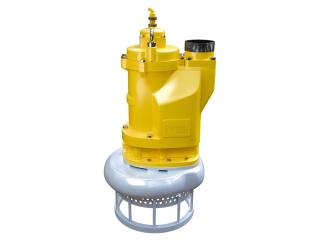
Cosmos Pumps manufactures dewatering pumps for applications including construction, mining, tunnelling and flood control. Its range includes CDW submersible pumps in standard, high-head and ultra-high-head configurations, with models designed for deep sump applications and heads reaching up to 200 metres.
A dewatering pump should ultimately be selected according to the site’s actual hydraulic conditions rather than its maximum advertised capacity. Water inflow, total head, solids content, pumping depth and operating conditions all have a direct bearing on the appropriate pumping solution.


