Other Services
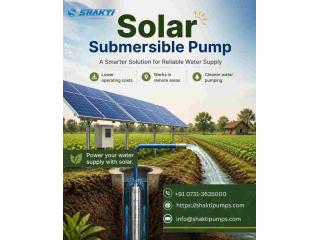
Access to water is essential for agriculture, livestock management, residential use and rural development. However, pumping water from deep underground can become expensive when the system depends entirely on grid electricity or diesel. Unreliable power supply can also interrupt irrigation at critical stages of crop growth. A solar submersible pump provides a practical alternative by using energy generated from sunlight to draw water from borewells, wells and other underground sources. It helps users reduce conventional energy consumption while maintaining a dependable water supply, particularly in remote and power-deficient areas. What Is a Solar Submersible Pump? A solar submersible pump is a water pumping system designed to operate below the water level. It is powered by electricity produced through solar photovoltaic panels instead of relying only on the conventional electricity grid. A typical solar pumping system includes: Solar photovoltaic panels A submersible water pump An electric motor A solar pump controller Mounting structures Electrical cables and safety components Water pipes and storage arrangements Solar panels capture sunlight and convert it into electricity. The controller regulates this power before supplying it to the motor, allowing the pump to lift water from the borewell and deliver it to the required location. How Does a Solar Submersible Pump Work? The working process is relatively straightforward. Solar panels generate direct-current electricity during daylight hours. The solar controller manages voltage, current and operating conditions to help the pump perform efficiently. The submersible pump remains underwater, where it pushes water towards the surface. This design is different from a surface pump, which pulls water from the source. Because a submersible system pushes water upwards, it can be suitable for deep borewells where surface pumps may struggle to operate effectively. Water can be supplied directly to irrigation systems or stored in an elevated tank. A storage tank can provide water after sunset without requiring a large battery bank. In many applications, storing water is more economical and easier to maintain than storing electricity. Major Benefits of Solar Submersible Pumps 1. Reduced dependence on grid electricity Agricultural areas do not always receive a stable power supply. Farmers may have to irrigate fields at inconvenient hours based on electricity availability. A solar-powered pumping system allows water pumping during daylight hours, reducing dependence on uncertain grid schedules. 2. Lower operating expenses Diesel-powered pumps require regular fuel purchases, transportation and engine servicing. Solar energy is freely available after the system has been installed. As a result, a solar submersible pump can significantly reduce recurring pumping expenses over its service life. 3. Suitable for remote locations Extending an electricity connection to an isolated farm, village or livestock facility can be expensive. Solar pumps can operate in off-grid areas, provided the site receives sufficient sunlight and the system is properly designed. 4. Cleaner pumping technology Solar pumping does not produce exhaust emissions during operation. It also avoids the noise, fuel leakage and fumes associated with diesel engines. This makes it a cleaner option for farms, communities and environmentally sensitive locations. 5. Low routine maintenance Solar pumping systems generally have fewer moving components than diesel-based arrangements. Regular panel cleaning, cable inspection and scheduled pump maintenance can help keep the system operating effectively. 6. Efficient use of available space Solar panels may be installed on unused land or suitable raised structures.


